Recover Smarter. Move Better. Return Stronger.
Recovery at Phoenix Performance Institute is built for athletes and active individuals who want more than temporary relief. Whether you are recovering from an injury, dealing with recurring pain, managing mobility limitations, or trying to return to training after a setback, our recovery services are designed to help you move better, rebuild strength, and return with confidence.
Led by a licensed Athletic Trainer, Phoenix combines sports medicine, movement assessment, therapeutic intervention, soft tissue treatment, rehabilitation strategies, and performance-based recovery tools to support your body through every stage of the recovery process.
The goal is not just to help you feel better for the moment. The goal is to identify what is limiting your movement, support proper recovery, reduce the risk of future injury, and help you get back to the activities, sports, and training that matter to you.
Why Work With an Athletic Trainer?
Athletic Trainers are highly qualified, multi-skilled health care professionals who work in collaboration with physicians and other healthcare providers. Their scope includes injury prevention, emergency care, clinical assessment, therapeutic intervention, rehabilitation, and management of injuries and medical conditions.
Athletic Trainers are often confused with personal trainers, but the two roles are very different. Athletic training follows a medical model, with formal education, clinical training, national board certification, and state licensure requirements. This gives Athletic Trainers the background to evaluate injuries, guide rehabilitation, support return-to-activity decisions, and provide care that connects recovery with performance.
At Phoenix Performance Institute, that medical and performance-based foundation is what shapes the recovery process. Each service is selected with purpose, based on your body, your movement, your injury history, and your goals.
Recovery Services Designed Around Your Body
Every recovery plan is different because every athlete and active individual moves differently. Phoenix offers a range of recovery and rehabilitation tools that may be used individually or combined as part of a complete treatment plan.
IASTM
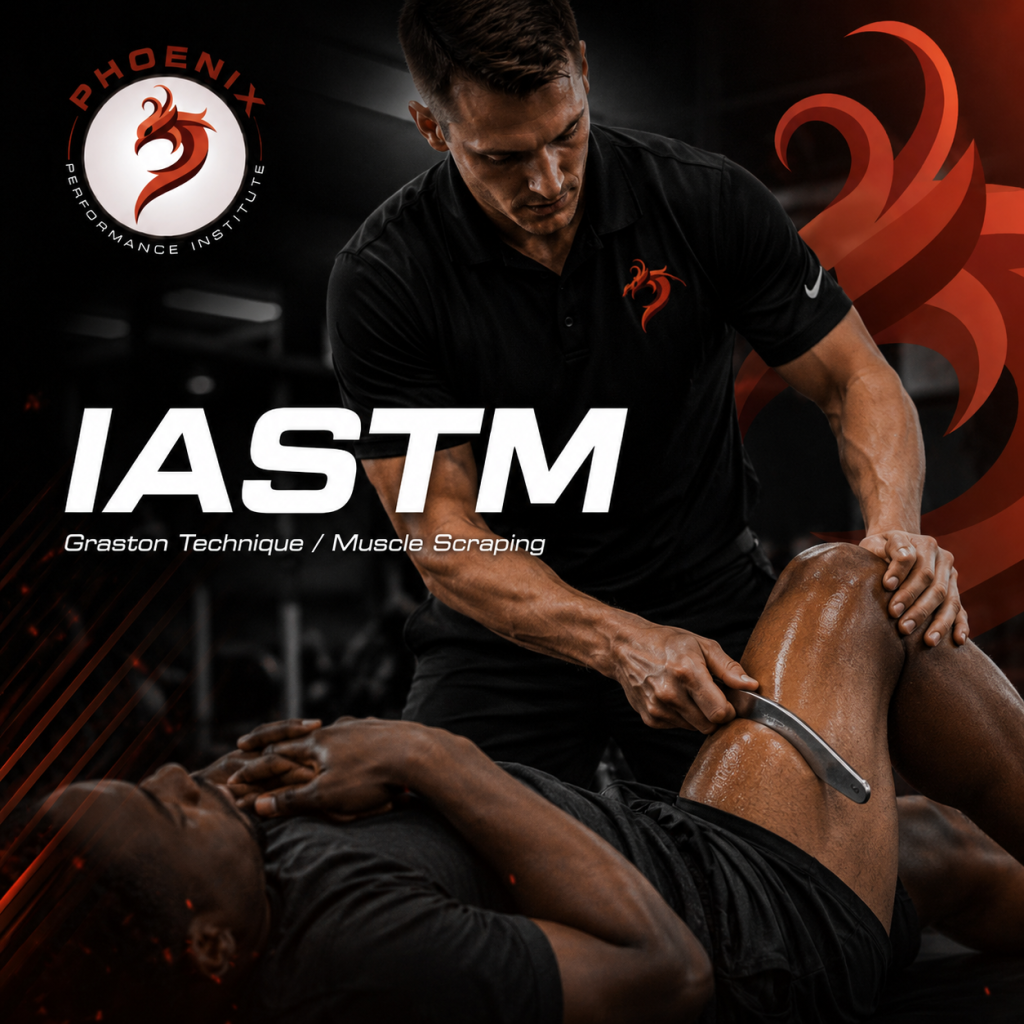
IASTM, or Instrument Assisted Soft Tissue Mobilization, is a hands-on treatment technique that uses specialized tools to assess and treat soft tissue restrictions. Commonly known as Graston Technique or muscle scraping, IASTM is used to address areas of tightness, scar tissue, fascial restriction, and movement limitation.
At Phoenix Performance Institute, IASTM may be used as part of a broader recovery or performance plan to help improve range of motion, reduce pain, support tissue mobility, and restore more efficient movement patterns. It is often combined with mobility work, corrective exercise, strength training, and sport-specific rehabilitation for the best results.
Research supports IASTM as a potentially helpful intervention for improving range of motion, pain, and function in select musculoskeletal conditions, especially when it is used alongside exercise and rehabilitation rather than as a stand-alone fix.
IASTM may be helpful for:
Muscle tightness and soft tissue restrictions
Limited range of motion
Scar tissue or adhesions
Tendon irritation or overuse issues
Post-injury stiffness
Athletic recovery and mobility work
Movement limitations affecting training or performance
How It Works:
During treatment, a clinician uses a specialized tool to glide over targeted areas of muscle, fascia, tendon, or soft tissue. The tool helps identify areas of restriction and allows focused treatment to the tissue. The goal is not simply to “scrape hard,” but to apply the right amount of pressure in the right area to help improve movement quality and tissue response.
The Graston Technique is one branded form of IASTM and is commonly associated with stainless steel instruments used by trained clinicians for soft tissue treatment.
What to Expect:
Some redness, warmth, or temporary soreness may happen after treatment. That does not always mean the treatment was more effective, and bruising should not be the goal. A good IASTM session should be purposeful, controlled, and paired with movement or exercise so the body can use the improved mobility in a functional way.
KT Taping
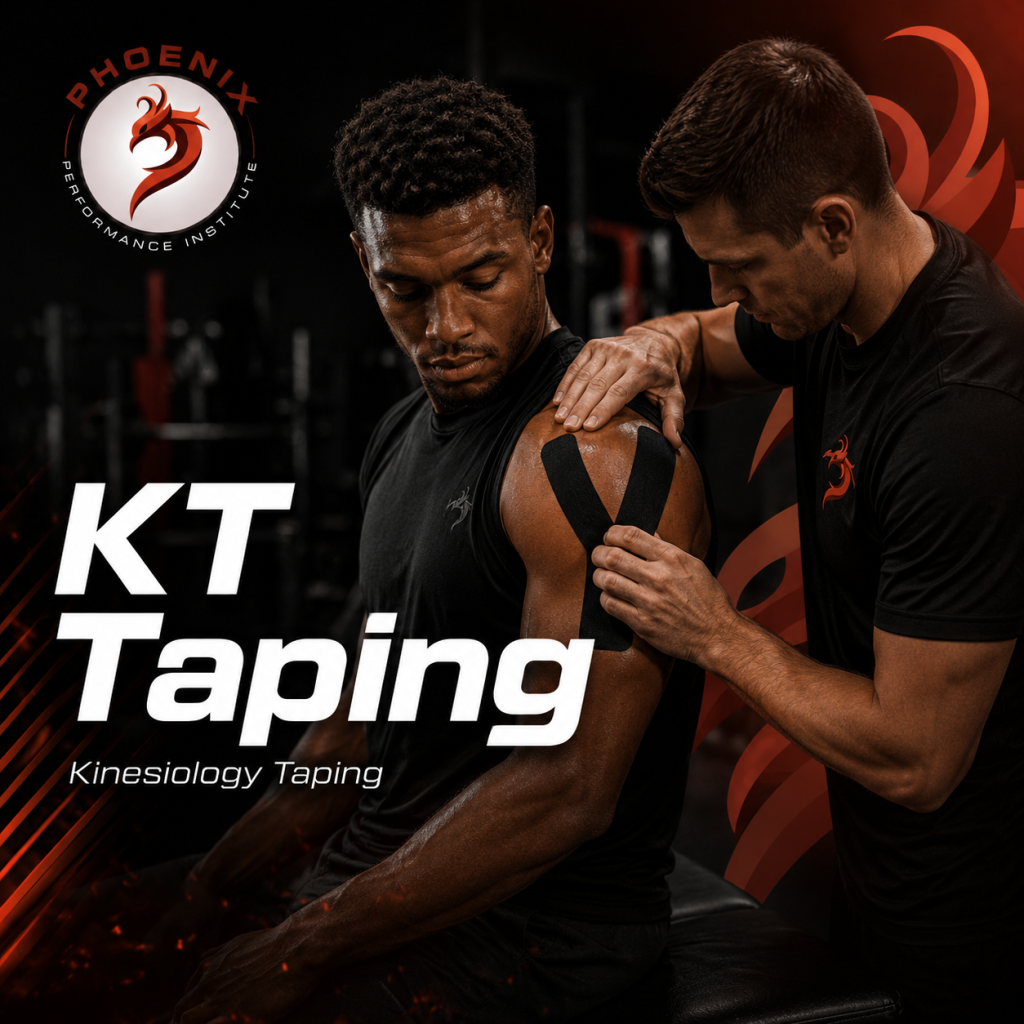
KT Taping, also known as kinesiology taping, uses elastic therapeutic tape applied to specific areas of the body to support muscles, joints, and soft tissue without fully restricting movement. Unlike traditional athletic tape, kinesiology tape is designed to move with the body, making it a useful option for athletes and active individuals who need support while continuing to train, compete, or recover.
At Phoenix Performance Institute, KT Taping may be used as part of a broader recovery, performance, or injury prevention plan. Taping can help provide light support, improve movement awareness, assist with muscle activation cues, and reduce unnecessary strain during activity. It is often paired with rehabilitation exercises, mobility work, strength training, and movement correction for better long-term results.
KT Taping is not a cure or a stand-alone fix. Its value comes from using it strategically alongside proper assessment, treatment, and training.
KT Taping may be helpful for:
Joint support during activity
Muscle strain or overuse irritation
Movement awareness and body mechanics
Shoulder, knee, ankle, hip, or back support
Post-injury return to activity
Swelling or soft tissue sensitivity
Athletic performance and recovery support
Reducing unnecessary stress on irritated areas
How It Work:
Kinesiology tape is applied with specific tension and placement based on the area being treated and the goal of the application. Depending on the situation, tape may be used to support a joint, encourage better movement mechanics, assist with muscle activation, or provide sensory feedback to help the body move with more control.
The goal is not to lock the body down. The goal is to provide support while still allowing natural movement.
What to Expect:
KT Tape is flexible, lightweight, and usually worn during normal activity or training. It may stay on for several days depending on skin sensitivity, activity level, and water exposure. Some people notice improved comfort, better movement awareness, or added confidence during activity.
Mild skin irritation can happen, especially with sensitive skin or prolonged wear. Tape should be removed if itching, burning, redness, or discomfort develops.
BFR Therapy
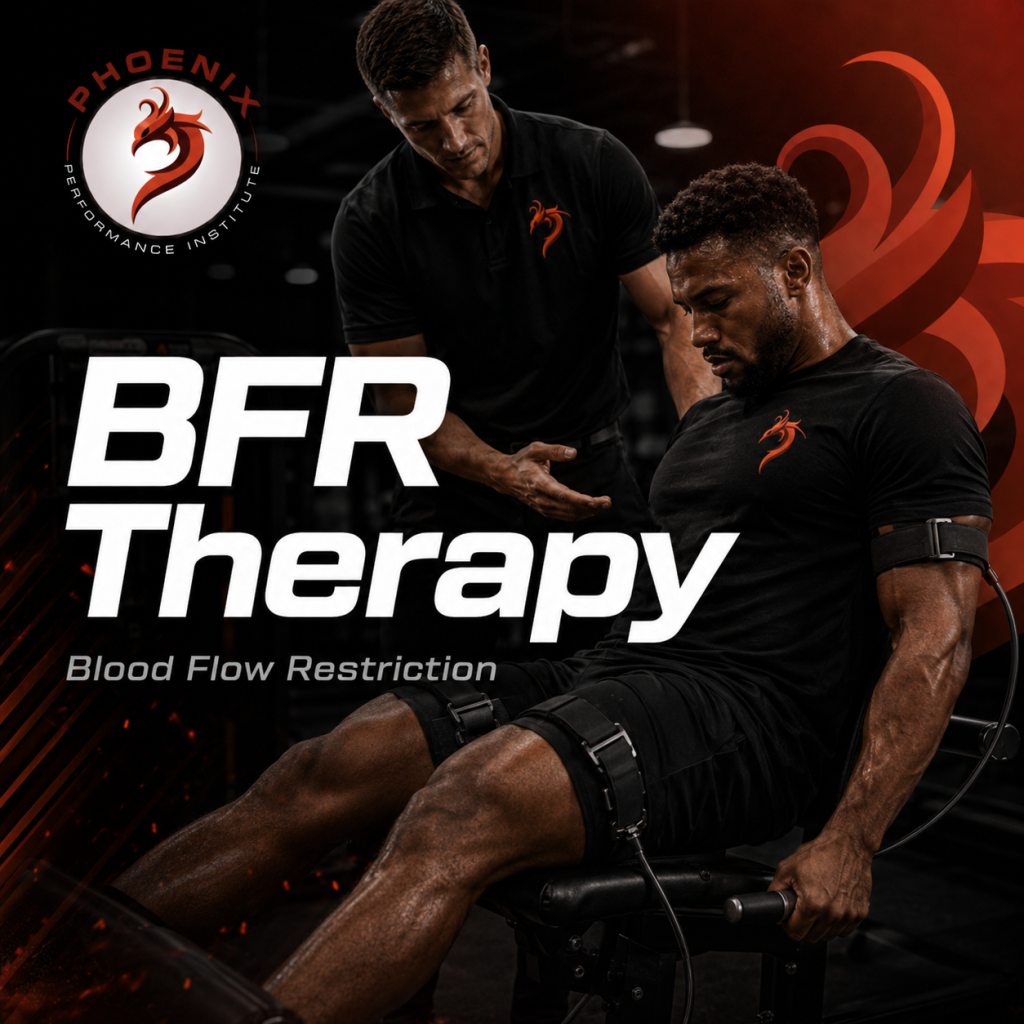
BFR Therapy, or Blood Flow Restriction Therapy, uses a specialized cuff placed around the upper arm or upper leg to partially restrict blood flow during low-intensity exercise. This creates a training effect that can help the muscles respond as if they are working harder, while using lighter loads and less stress on the joints.
At Phoenix Performance Institute, BFR may be used as part of a broader rehabilitation or performance plan to support strength development, muscle activation, recovery, and return-to-activity progress. It can be especially useful when an athlete or active individual needs to rebuild strength but is not ready for heavier resistance training.
Research supports BFR as a useful tool in rehabilitation because it may help improve strength and muscle growth during early recovery phases when heavier loads are not tolerated. It should be applied by a trained professional using appropriate pressure, timing, and exercise selection.
BFR Therapy may be helpful for:
Post-injury rehabilitation
Post-surgical strength rebuilding
Muscle loss or weakness
Early return-to-training programs
Joint-sensitive strength training
Athletes unable to tolerate heavy loads
Tendon or soft tissue recovery plans
Performance maintenance during recovery
How It Works:
During BFR Therapy, a specialized cuff is placed on the upper portion of the limb being trained. The cuff limits some blood flow leaving the working muscle while still allowing blood to enter. This creates muscle fatigue and metabolic stress faster than normal low-load exercise, which can help stimulate strength and muscle adaptation without requiring heavy weight. Cleveland Clinic describes BFR as a method where blood still enters through the arteries while the band limits venous return, causing the muscle to fatigue more quickly.
The goal is not to completely cut off circulation. The goal is controlled, professional restriction paired with specific exercises.
What to Expect:
BFR training can feel challenging even with light resistance. Clients may feel muscle fatigue, pressure from the cuff, or a strong “burn” during the exercise. That feeling is expected, but sharp pain, numbness, tingling, dizziness, or unusual discomfort should be reported immediately.
BFR should be supervised by someone trained in proper application. It may not be appropriate for everyone, especially individuals with certain vascular, clotting, cardiac, blood pressure, or circulation concerns.
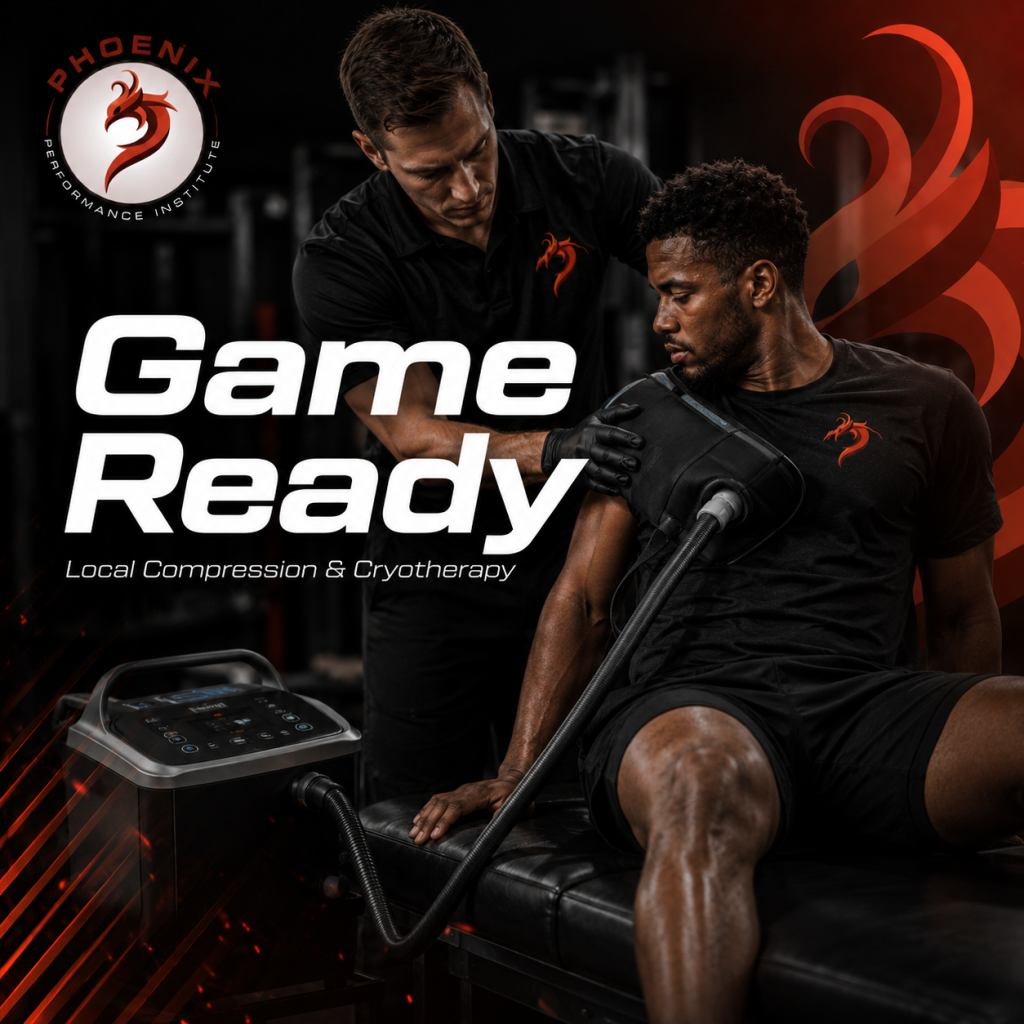
Game Ready
Game Ready therapy uses a specialized system that combines controlled cold therapy with intermittent compression. This allows targeted treatment to specific areas of the body, helping support recovery, reduce swelling, and calm irritated tissue after injury, intense training, or certain post-surgical situations.
At Phoenix Performance Institute, Game Ready may be used as part of a broader recovery plan for athletes and active individuals who need focused support for pain, inflammation, swelling, or post-training recovery. By combining cryotherapy with compression, the treatment can help improve comfort while supporting the body’s natural recovery process.
Game Ready is not a replacement for proper rehabilitation, strength work, or medical care. It works best when used alongside a complete recovery strategy that includes movement assessment, progressive exercise, mobility work, and return-to-activity planning.
Game Ready may be helpful for:
Post-injury swelling
Post-training soreness
Joint irritation
Soft tissue inflammation
Sprains and strains
Post-surgical recovery support
Athletic recovery between training sessions
Knee, ankle, shoulder, hip, or elbow recovery
How It Works:
Game Ready uses an anatomical wrap placed around the treatment area. The system circulates cold water through the wrap while applying controlled compression. The cold therapy helps reduce tissue temperature, while the compression helps manage swelling and fluid movement in the treated area.
The goal is to provide targeted, controlled recovery support without relying on basic ice packs alone.
What to Expect:
During treatment, clients typically feel cold compression around the targeted area. The pressure may gently increase and decrease during the session. Most sessions are comfortable, but the area may feel cold, tight, or slightly numb during use.
Game Ready may not be appropriate for everyone, especially individuals with certain circulation issues, cold sensitivity, nerve problems, vascular conditions, or specific post-surgical restrictions. Treatment should be guided by a trained professional.
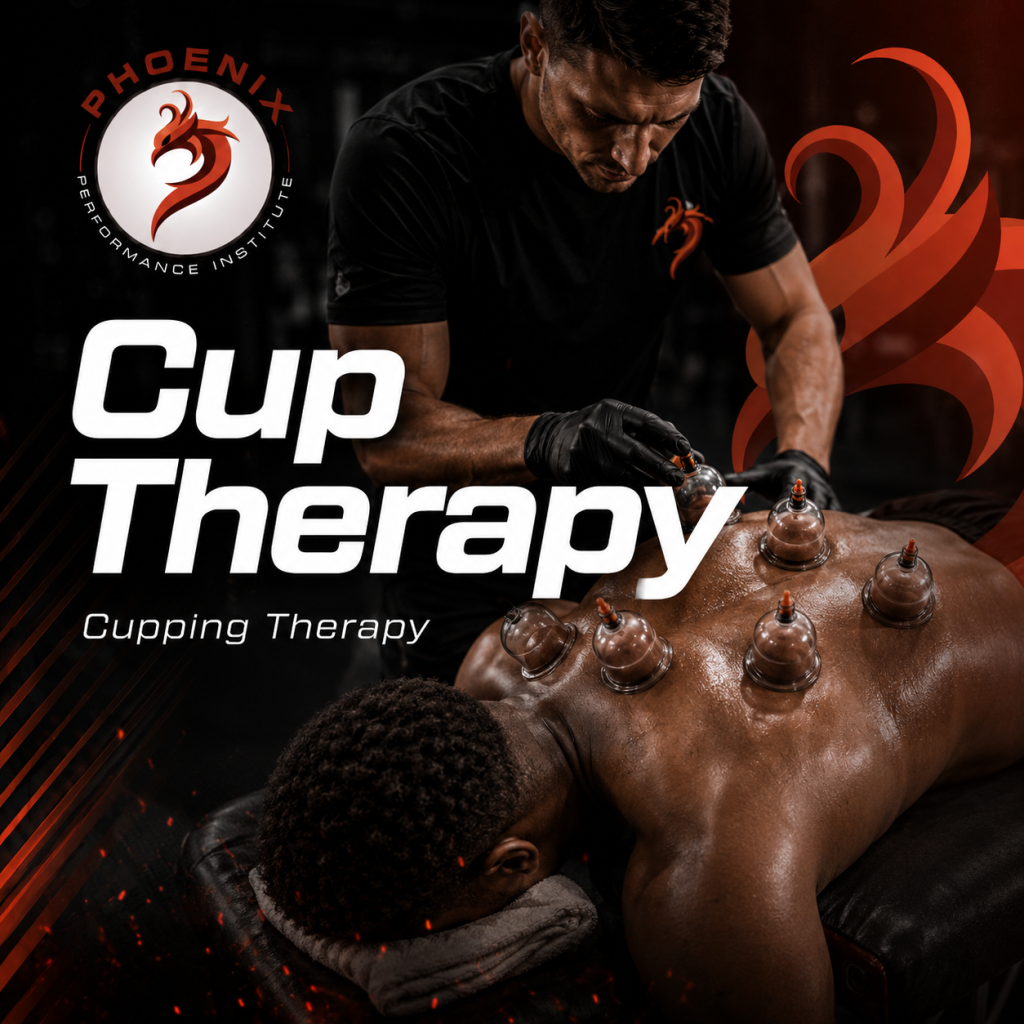
Cup Therapy
Cup Therapy, commonly known as cupping therapy, uses specialized cups placed on the skin to create gentle suction over targeted muscles and soft tissue. This technique is often used to help address muscle tightness, soft tissue restriction, soreness, and movement limitations.
At Phoenix Performance Institute, cup therapy may be used as part of a broader recovery, mobility, or performance plan. It can help support tissue mobility, reduce tension, and provide temporary relief for athletes and active individuals dealing with soreness or restricted movement.
The honest clinical note: cupping can be useful for some people, but the evidence is mixed. Cleveland Clinic notes that cupping uses suction to pull on the skin and may help with issues such as back pain, neck pain, and headaches, but benefits are not guaranteed and bruising or skin irritation can occur.
Cup Therapy may be helpful for:
Muscle tightness
Post-training soreness
Soft tissue restrictions
Mobility limitations
Back, shoulder, hip, or leg tension
Athletic recovery support
Movement preparation before training
Recovery after intense activity
How It Works:
During treatment, cups are placed on specific areas of the body and suction is created using either a pump or another controlled method. The suction gently lifts the skin and soft tissue, which may help increase local blood flow, reduce perceived tightness, and improve short-term mobility.
The goal is not to bruise aggressively or “pull toxins” from the body. That language is overused and not well supported. The goal is controlled soft tissue support that fits into a larger recovery or movement plan.
What to Expect:
Cup therapy may create a pulling or tight sensation on the skin. After treatment, circular marks or temporary discoloration are common and may last several days. Some people also feel mild soreness, warmth, or sensitivity in the treated area.
Cupping should not be used over open wounds, active skin infections, irritated skin, uncontrolled swelling, or areas with certain vascular or circulation concerns. It should be applied by someone trained in proper technique and appropriate pressure.
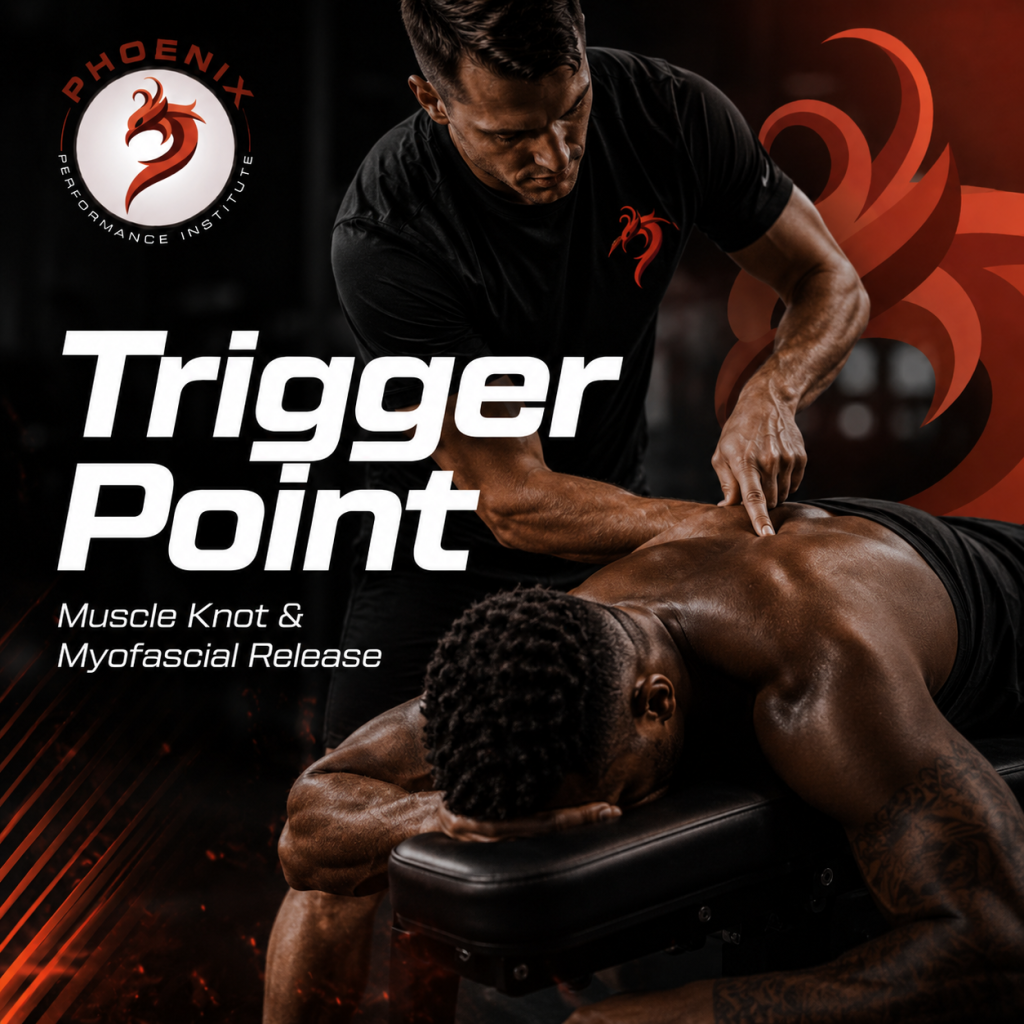
Trigger Point
Trigger Point Therapy focuses on specific tight or irritated areas within muscle tissue, often referred to as muscle knots or trigger points. These areas can create localized discomfort, limit range of motion, and sometimes refer pain into nearby areas of the body.
At Phoenix Performance Institute, trigger point therapy may be used as part of a broader recovery, mobility, or performance plan to help reduce muscle tension, improve movement quality, and support more efficient mechanics. It is often paired with stretching, mobility work, corrective exercise, strength training, and other soft tissue techniques for better long-term results.
Trigger points are commonly associated with muscle injury, repetitive stress, poor posture, or ongoing muscle overload. Mayo Clinic notes that muscle injury or repeated stress can contribute to the formation of trigger points, while Cleveland Clinic describes trigger points as tight “knots” that can contribute to myofascial pain.
Trigger Point Therapy may be helpful for:
Muscle knots and tight bands
Neck, shoulder, back, hip, or leg tension
Limited range of motion
Post-training soreness
Repetitive strain discomfort
Movement restrictions
Athletic recovery support
Pain related to muscle overuse
How It Works:
During trigger point therapy, focused pressure is applied to specific areas of tight or sensitive muscle tissue. The goal is to help reduce tension, calm irritated tissue, improve local mobility, and restore better movement patterns.
This may be done manually through hands-on pressure, assisted stretching, soft tissue work, or combined with other clinical tools depending on the client’s needs. Cleveland Clinic lists physical therapy, stretching, dry needling, and trigger point injections among treatment approaches used for myofascial pain, depending on the case and provider scope.
What to Expect:
Trigger point work can feel tender while pressure is applied, especially in highly irritated areas. Some soreness afterward can happen, but the treatment should be controlled and purposeful, not just painful for the sake of being intense.
The goal is not simply to “dig into knots.” The goal is to identify the right tissue restriction, apply the right amount of pressure, and then reinforce better movement through mobility or exercise.